

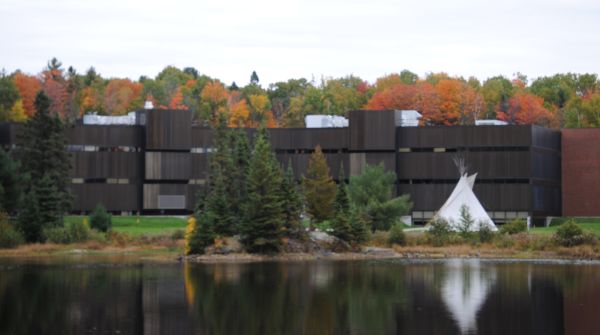

It is the largest single dose testosterone administration study ever conducted and all testing will take place in Dr. Justin Carré’s Social Neuroendocrinology Lab at Nipissing University.
A team of researchers from around the world is investigating whether the hormone testosterone influences economic decision-making in young men as part of a landmark research study currently underway at Nipissing. The university’s Social Neuroendocrinology Lab was built thanks to a Canada Foundation for Innovation infrastructure grant.
In the study, men will be randomly assigned to receive a single dose of intranasal testosterone gel (or placebo gel) and will perform a number of well-validated economic decision-making tasks. The researchers will also measure key personality traits previously found to influence the relationship between testosterone and human social behaviour.
Testing has already begun at Nipissing and data collection is expected to run for 12 to 18 months. The data will then be analyzed by the team to provide conclusions around the question of how testosterone affects economic decision-making in young men.
The project is expected to be complete within 12-18 months and to cost $180,000. Funding for the project is provided by a grant from the Swedish Foundation for Humanities and Social Sciences to Dr. Anna Dreber and Dr. Magnus Johannesson.
The multi-disciplinary project is being conducted by a team of six researchers, including Dr. Coren Apicella, assistant professor of psychology, University of Pennsylvania; Dr. Anna Dreber, professor of economics, Stockholm School of Economics; Dr. Magnus Johannesson, professor of economics, Stockholm School of Economics; Dr. Pranjal Mehta, senior lecturer psychology, University College London; Dr. Gideon Nave, assistant professor at the Wharton School of Business, University of Pennsylvania, and Dr. Carré, associate professor of psychology, Nipissing University.