



The North Bay Parry Sound District Health Unit has confirmed that a blacklegged tick found in North Bay tested positive for the bacteria that can cause Lyme disease. The tick was found in the skin of an individual and was submitted to the Health Unit for identification and testing. To date in 2018, 14 ticks have been sent for identification, with seven being identified as blacklegged. Only one of those seven ticks tested positive for the bacteria that causes Lyme disease.
Senior Public Health Inspector Brendan Hatton says that although the risk of contracting Lyme disease in the Health Unit district is relatively low, it’s important to protect yourself and children in your care.
Methods to prevent tick bites include:
- Use bug spray or other insect repellants that contain DEET or Icaridin;
- Wear long-sleeved shirts and long pants, and tuck your shirt into your pants and your pants into your socks;
- Wear light-coloured clothing to spot ticks more easily;
- Search your clothes and body for ticks at least once a day, paying special attention to areas such as the groin, navel, armpits, scalp, behind ears and knees;
- Don’t forget to tick check children in your care;
- Try to stay on cleared paths when possible, as ticks are more commonly found in wooded areas, or in tall grasses, bushes and shrubs; and
- Take a shower as soon as you can after being outdoors
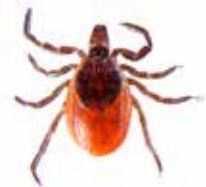
How to remove a tick:
If you find a tick on your body, remove it carefully with tweezers. Grasp the tick by the head as close to the skin as possible. If parts of the tick’s mouth break off and remain in the skin, remove them with tweezers. If you can’t remove the mouthparts, leave them alone and let the skin heal. Collect the tick, and make note of where you believe to have encountered it. See your health care provider right away, and when possible, bring the tick to the Health Unit.
For more information on Lyme disease, please visit the Health Unit website at www.myhealthunit.ca/lyme or call 1-800-563-2808.
Video courtesy of Health Canada
Quick Facts:
- In the last five years, there have been seven human cases of Lyme disease in the Health Unit area, of which three were travel-related.
- Blacklegged ticks are not common to the area; however, ticks can travel on birds and deer.
- Blacklegged ticks can carry Lyme disease. Ticks are small bloodsucking insects that cannot fly. They live in wooded or brushy areas and attach themselves to passing animals or people. While most ticks do not carry diseases, it’s important to avoid and check for them and remove them as soon as you find them.
- People can become infected with Lyme disease if they are bitten by an infected tick.
- In most cases, the tick must usually be attached for at least 24 hours for the bacterium that causes Lyme disease to be passed on to the host.
- The most common symptom of Lyme disease is an expanding skin rash, which can appear between three and 30 days after a bite.
- If left untreated, other symptoms may develop including fever, chills, headache, fatigue muscle and joint aches, problems with your heartbeat, breathing, balance and short-term memory.
- The earlier the treatment is received the better.
- There has been an increase in confirmed cases of Lyme disease in Ontario, partly due to an increase and expansion of blacklegged tick populations to new areas of the province.
- Infected ticks are continuing to spread and can now also be found in the Simcoe-Muskoka district, York Region and all of Eastern Ontario as well as Hamilton and parts of Northwestern Ontario. For the Lyme disease risk area map click here.