

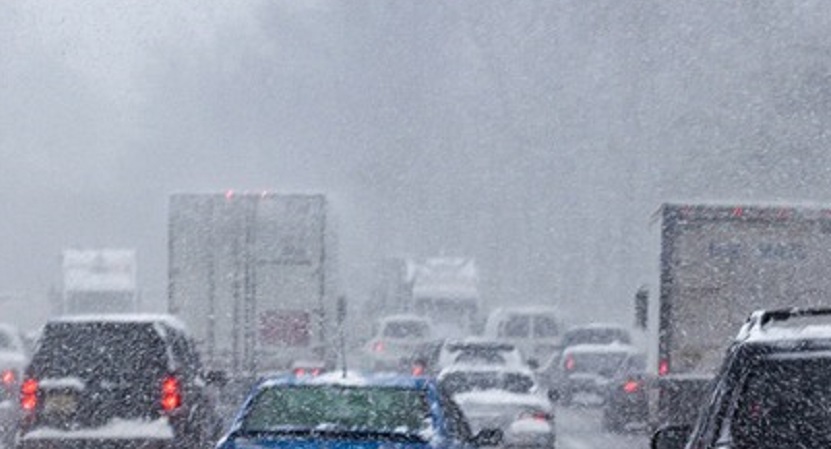

With the winter driving season in full swing, the OPP reminds motorists to practice safe habits.
Snow and freezing temperatures will create some hazardous driving conditions but there are things we can do to combat the conditions. Motorists are reminded to completely clear the snow off their vehicles and to ensure visibility in all directions before heading out onto the roadway. A buildup of snow on your vehicle and a foggy or iced over windshield or windows can drastically reduce your visibility and cause a traffic hazard to other motorists.
The OPP reminds drivers that it is their responsibility to take the time to properly clean off their vehicles and ensure a clear view out of all the windows and windshield or the OPP may lay Highway Traffic Act charges.
Give yourself a little extra time to reach your destination as traffic will be slower. Drive according to the weather conditions. Reduce your speed and increase your following distance to ensure you can stop safely if needed. Driving too fast for the conditions is the most common cause of winter collisions. Accelerate slowly and brake sooner to avoid spinouts, especially at intersections.
All-season tires don’t work the same on snow, ice or cold pavement. The stopping distance of a car with winter tires can be up to 30 to 40 per cent shorter than one with all-season tires. The most important part of a winter tire is its rubber compound. This is designed to stay soft in freezing temperatures, and very effective for 7 C and below. The tread compound used in all-season tires offers little cold weather traction and becomes hard, losing pliability and traction in freezing temperatures. Winter (snow) tires, however, are designed to help deliver safety and control in snow, slush, rain, ice and cold weather.
Winter tires are designed to move water. If the water isn’t moved away from the area in front of the tire, the car will hydroplane. This is why winter tires are covered with grooves and channels. The tire tread has grooves and channels to move water away to the sides, allowing the tire to stay in contact with the surface.
The number one cause of motor vehicle collisions during snowy conditions is speed. Driver’s going too fast for road and weather conditions. The OPP encourages all motorists to practice safe and courteous driving habits to reduce the risk of preventable winter collisions. Remember – ice and snow – keep it slow!