


Our area has seen an increase in opioid-related overdose deaths over the past few years and throughout the COVID-19 pandemic.
That’s according to North Bay Parry Sound District Health Unit. The most recent preliminary data shows that the Health Unit district’s opioid-related death rate from January to November 2020 was 34.7 deaths per 100,000; fifth highest in the province, with Public Health Sudbury & Districts, Porcupine Health Unit, Algoma Public Health, and Thunder Bay District Health Unit regions experiencing higher rates.
In light of the increase, the Health Unit alongside the AIDS Committee of North Bay & Area is launching a two-month naloxone campaign, entitled Naloxone Saves Lives. Get Trained. Get a Kit. This campaign aims to increase awareness of opioid overdoses in our district and teach people how to respond to an overdose.
Katharine O’Connell, Community Health Promotion at the North Bay Parry Sound District Health Unit says the campaign is part of a larger strategy to help reduce the number of opioid-related overdose deaths in our region.
The campaign aims to create awareness of the signs and symptoms of an opioid overdose, how to help someone who is experiencing an opioid overdose, and that anyone can carry naloxone, and help save a life. The campaign also provides information on where to get a free naloxone kit as well as other resources and supports related to mental health and/or addictions.
The Health Unit says everyone plays a role in addressing overdoses in our district and recognizing the signs and symptoms of an opioid overdose is one important step to help to save a life.
Signs and symptoms of an opioid overdose include:
- person can’t be woken up;
- breathing is slow, shallow or has stopped;
- snoring or gurgling sounds;
- fingernails and lips turn blue or purple;
- pupils are tiny or eyes are rolled back;
- body is limp and skin is cold.
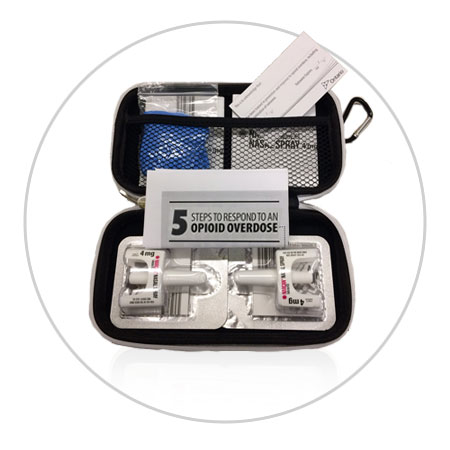
Similarly, knowing how to respond to an opioid overdose is also important. Steps to responding to an opioid overdose include:
- Stimulating the individual with touch or sound.
- Calling 9-1-1.
- Giving naloxone.
- Performing chest compressions (rescue breaths are not recommended during COVID-19).
- Checking to see if the naloxone is working. If the person is alert and breathing, place them in the recovery position. If they are not, give another dose of naloxone.
- Continue steps 3 to 5 until the individual is breathing or help arrives.
“Overdoses can occur anywhere; in our homes, on the street or inside a business,” explains Glenn Petersen, Hepatitis C Outreach Worker from the AIDS Committee of North Bay & Area. “This campaign encourages individuals, businesses and agencies to be prepared, and carry naloxone in case an overdose occurs.”
Naloxone is a medication that temporarily reverses the effects of an opioid overdose, and is available free-of-charge in Ontario in two forms: injectable and nasal spray. Naloxone is safe and effective to use and works in as little as two to three minutes. Some people may require more than one dose of naloxone so it is important to have multiple doses of naloxone on hand.
Individuals, businesses or agencies interested in learning more about naloxone and/or wishing to access free naloxone training for themselves or their staff can do so virtually by registering at http://bit.ly/naloxonesavelives. Individuals can also check with participating pharmacies across the Health Unit region about being trained and picking up naloxone.
This campaign, launched across the Health Unit district, in both English and French contains a variety of mediums including public service announcements, social media posts, posters and postcards. To learn more about naloxone or to download campaign materials visit www.myhealthunit.ca/naloxone.
The most recent preliminary data shows that the Health Unit district’s opioid-related death rate from January to November 2020 was 34.7 deaths per 100,000; fifth highest in the province, with Public Health Sudbury & Districts, Porcupine Health Unit, Algoma Public Health, and Thunder Bay District Health Unit regions experiencing higher rates.