
The remains of six individuals will be returned to Dokis First Nation.
They will arrive from The Field Museum in Chicago, Illinois.
According to a release, Dokis representatives and Field Museum staff conducted collaborative research to determine how these six ancestral remains came to be in the Museum’s care.
They found that anthropologist Thomas Proctor Hall (1858-1942) removed these individuals from their graves in 1891. At the time, Hall took these remains on behalf of anthropologist Franz Boas (1839-1915) for anthropological exhibits at the Chicago World’s Columbian Exposition of 1893. Some of these exhibits, including the remains of these six individuals, became part of the Museum’s collections after the conclusion of the Exposition.
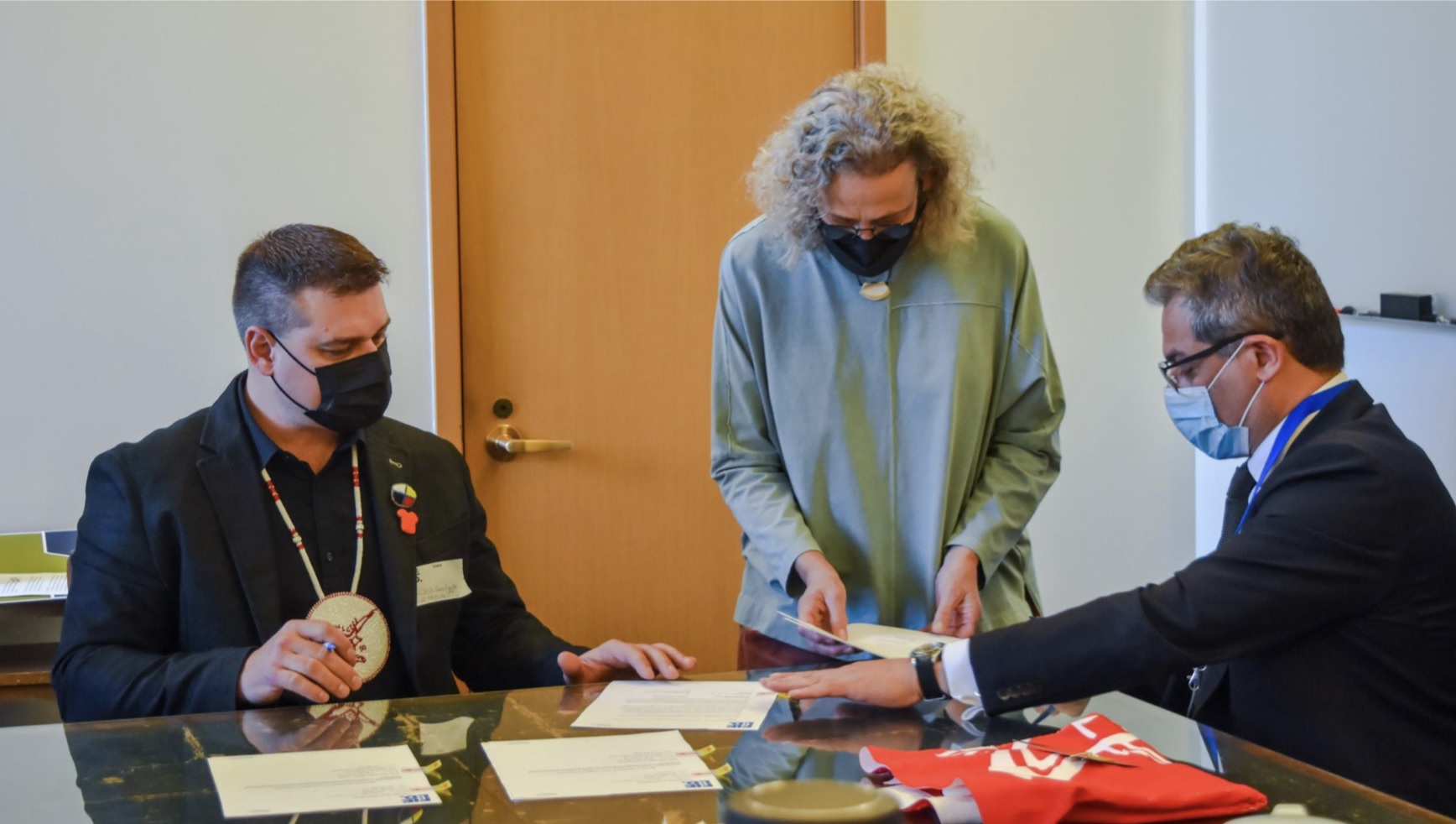
On Oct. 26, a signing ceremony was held by representatives from Dokis First Nation including Dokis Chief Gerry Duquette Jr., and the museum’s President Julian Siggers.
“We want to express our appreciation to all the wonderful staff, committees, and Board Members involved at the Field Museum,” said Chief Duquette. “It was truly an honour working with everyone, especially Helen Robbins, to close this chapter in our history. The repatriation of these remains will guide their spirits home to peacefully join their ancestors, and we are proud to finally have completed what my late Grandpa Leonard Dokis started so many moons ago.”
The release states over the last several years, Dokis First Nation has been leading the “Dead Island Repatriation Project” on behalf and with the consent of First Nation communities within the Robinson Huron Treaty.
“It is our privilege to have welcomed representatives from the Dokis First Nation to the Field Museum for the important occasion of returning these ancestral remains to their descendant community,” Siggers said. “We look forward to maintaining this meaningful relationship.
Since 1990, the Native American Graves Protection and Repatriation Act (NAGPRA) has required United States museums that receive federal funds to repatriate human remains and cultural objects to federally-recognized Indigenous communities. There is no equivalent law for international repatriation requests. However, since 1989, the Field Museum has been willing to consider international requests for the repatriation of human remains when made by a related cultural group, so that the remains can be placed in repose in accordance with the group’s cultural practices.